
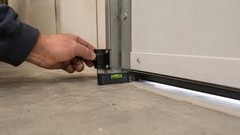
A garage door that refuses to close, reverses halfway down, or flashes its opener lights without explanation is almost always telling you one thing: the safety sensors are out of sync. These small photo-eye sensors sit near the bottom of each track, and when they lose their connection, your door simply will not cooperate. The good news is that learning how to line up garage door sensors is one of the more approachable home repairs a homeowner can tackle. When the fix turns out to be more stubborn than expected, our team handles garage door repair in Wausau, WI and can get your door working again quickly.
Before you reach for the phone, though, it helps to understand what these sensors do and why they drift out of place. A few minutes of careful adjustment often solves the problem entirely, saving you time and frustration. Below we walk through exactly what to look for and how to get your sensors talking to each other again.
Why Garage Door Sensors Matter
Every automatic garage door made in the last few decades includes safety features designed to prevent entrapment, often using a pair of safety sensors called photo eyes. One sends an invisible infrared beam across the bottom of the doorway, and the other receives it. As long as that beam stays unbroken, the door knows the path is clear and will close normally. If anything interrupts the beam, whether it is a pet, a stray broom, or a misaligned sensor, the door stops and reverses to prevent injury or damage.
This is an important safety feature, not an optional extra, which is why you should never try to bypass or disable it. The U.S. Consumer Product Safety Commission's garage door safety guidance explains the importance of properly functioning automatic reversal systems. When you need to line up garage door sensors, you are really restoring an important layer of protection for your family and belongings. A properly aligned pair keeps the whole system running the way it was designed to.
Signs Your Sensors Are Out of Alignment
Misaligned sensors tend to announce themselves in predictable ways. The most common symptom is a door that starts to close, then stops and rolls back up on its own. You might also notice the opener lights blinking repeatedly, which is a diagnostic code many units use to signal a sensor problem. Some doors will refuse to close at all unless you hold the wall button down continuously.
The sensors themselves offer clues too. Most have small indicator lights, usually one green and one amber or red. When they are aligned and communicating, both lights glow steadily. If one of them flickers, dims, or goes dark, the beam is being blocked or the two eyes are no longer pointed directly at each other. That visual feedback makes it much easier to know when you have the alignment right.
How to Line Up Garage Door Sensors Step by Step
With a basic understanding of the parts, the actual adjustment is straightforward. Work slowly and check the indicator lights as you go, since small movements make a big difference at the distance the beam travels.
- Clean both sensor lenses gently with a soft, dry cloth. Dust, cobwebs, and condensation can block the beam and mimic a true alignment problem.
- Check that nothing is physically obstructing the path between the two eyes, including leaves, trash, or stored items near the track.
- Look at the mounting brackets. If a bracket has been bumped or loosened, tighten the wing nut just enough to hold the sensor while still allowing you to pivot it.
- Adjust one sensor so it points directly at its partner across the opening. Watch the indicator light and stop moving it the moment the light turns solid.
- Confirm both lenses sit at the same height. Measuring from the floor on each side is a quick way to verify this, and matching heights usually brings the beam into alignment fast.
- Tighten the brackets fully once the lights are steady, then test the door with the remote to make sure it closes smoothly.
If the lights stay solid and the door closes without reversing, you have successfully completed the alignment. Run the door through a couple of full cycles to be sure the fix holds, since a loose bracket can shift again under vibration.
When Alignment Alone Will Not Fix It
Sometimes you line up garage door sensors perfectly and the door still misbehaves. That usually points to a deeper issue. Frayed or pinched sensor wiring is a frequent culprit, especially in older installations or garages where rodents have been active. A faulty photo eye that has reached the end of its lifespan may also refuse to light up no matter how precisely you aim it.
Moisture intrusion, a loose connection at the opener terminal, or a problem with the opener itself can all produce symptoms that imitate misalignment. If you have cleaned the lenses, confirmed a clear path, and matched the sensor heights but the door still reverses, the trouble likely lies beyond simple positioning. At that point it is worth bringing in a professional who can test the wiring and the garage door opener to pinpoint the real cause rather than guessing at replacement parts.
Preventing Future Sensor Problems
A little routine attention keeps your sensors reliable through every season. Wisconsin winters bring snow, road salt, and temperature swings that can fog lenses or shift brackets, so a quick visual check every few months pays off. Make sure nothing gets stacked near the sensors in a busy garage, since boxes and sports equipment have a way of migrating into the beam's path.
Gentle handling matters too. The brackets that hold the sensors are deliberately light so they give way rather than break if something strikes them, which means a bumped ladder or a kicked ball can knock one out of alignment in an instant. Teaching everyone in the household to respect that low corner of the doorway goes a long way. If you want to stay ahead of common issues, our blog covers practical maintenance tips for keeping your whole door system in good shape.
When to Call the Professionals
Many homeowners can line up garage door sensors on their own, but persistent problems, damaged wiring, or an aging opener are good reasons to let an expert step in. A professional visit also gives you a chance to catch other wear before it leads to a breakdown, from worn rollers to springs that have lost their tension. If your sensors keep drifting no matter what you do, there may be a structural or electrical issue that a trained eye will spot right away.
At A Plus Doors LLC, we help homeowners throughout Wausau and the surrounding areas keep their doors safe and dependable, and we also provide trusted garage door services in Stevens Point. Whether you need a quick sensor fix, a new opener, or a full garage door installation in Wausau, our team is ready to help. Reach out through our contact page for a straightforward assessment, and we will make sure your door closes safely every single time.